




























by Brittany Phillips,University of North Carolina at Chapel Hill School of Medicine
Credit: CC0 Public Domain
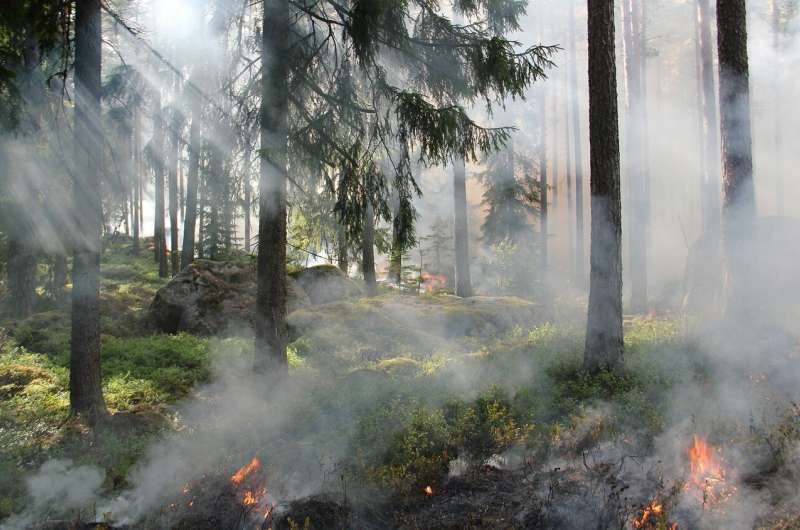
Breathing wildfire smoke, even briefly, can change the bacteria and immune cells in your lungs, which may contribute to adverse health effects.
Everyone knows smoking tobacco is bad for you, but what about smoke from burning wood—in particular that of wildfires? UNC School of Medicine researchers have now made some advances in learning how breathing inwood smokecan change the natural balance of bacteria in our lungs—leading to effects on ourrespiratory healththat could contribute to disease, like asthma and COPD.
"Similar to the skin and the gut, the inside of our lungs is covered in microbes that can help maintain lung health, also called the microbiome," said UNC School of Medicine's Meghan E. Rebuli, Ph.D., assistant professor of pediatrics at the Center for Environmental Medicine, Asthma, and Lung Biology. "However, if the balance of bacteria present in the lungs is altered by exposures, such as what we were testing here with wood smoke, it has been associated withlung disease."
In an articlepublishedin theAmerican Journal of Respiratory and Critical Care Medicineand led by first author, UNC School of Medicine graduate student Catalina Cobos-Uribe, researchers identified how much of the different bacteria present in the lungs change after breathing in smoke from burning wood. Mucus samples from the lungs—called sputum—were collected among participants in the study.
Importantly, it was noted that some bacteria that are known to be "good" bacteria were less common after exposure and some bacteria known to be "bad" were more common. This data suggests that wood smoke can alter thelung microbiome, reducing good bacteria and increasing bacteria that can potentially cause harm if present in too large an amount.
In addition to shifts in the lung microbiome, researchers observed a drop in lung macrophages, an immune cell important for clearing harmful exposures, including particles and microbes. Overall, even short-term exposures to wood smoke, used here as a model for wildfire smoke, in humans can shift the balance of the lung microbiome andimmune cells.
"While we thought it was possible for the microbiome to communicate and coordinate with lung cells when responding to wood smoke exposures, we were not sure what we would find," said Rebuli, corresponding author. "Here where we identified an association between microbiome changes and macrophage changes is a relatively novel insight."
This work offers a unifying link of better understanding the role of the respiratory microbiome in the lung response to inhaled pollutants. It also highlights how the lung microbiome could be used to screen patients for increased risk ofadverse health effectsdue to wood smoke exposure or to potentially tailor preventative or treatment strategies.
"This could add additional biomarkers, changes in levels of specificbacteria, that could be used to detect early smoke exposure effects in the lung," said Rebuli. "Long term, we hope that this research will lead to respiratory microbiome-targeted therapies, such as probiotics or microbiome-focused drugs to restore microbiome balance after wildfire smoke exposure."
More information: Catalina Cobos-Uribe et al, Human Sputum Microbiome Composition and Sputum Inflammatory Cell Profiles Are Altered with Controlled Wood Smoke Exposure as a Model for Wildfire Smoke, American Journal of Respiratory and Critical Care Medicine (2025). DOI: 10.1164/rccm.202407-1493oc Journal information: American Journal of Respiratory and Critical Care Medicine
Provided by University of North Carolina at Chapel Hill School of Medicine







Post comments