































byVictoria University of Wellington
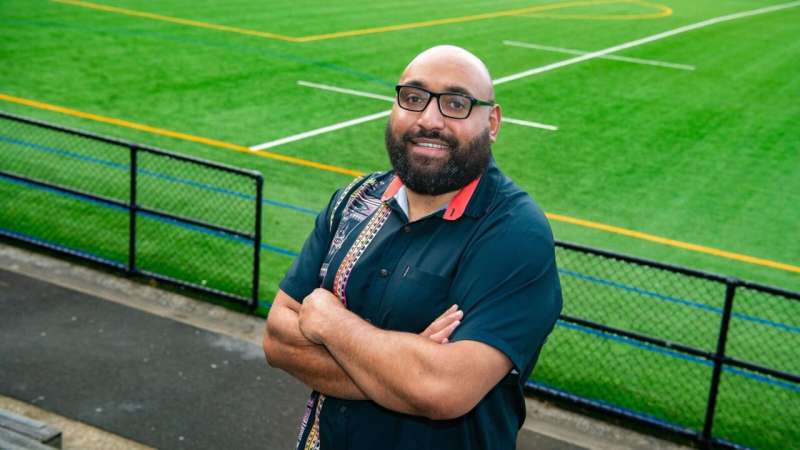
Credit: Victoria University of Wellington
In high-performance sport, success is often measured in medals, rankings and results, but far less attention is paid to the human cost of achieving them. For Wayne Aquila, Master of Commerce graduate, this tension became the driving force behind his research project, which saw him investigate the influence of power on well-being in high-performance sport environments.
Wayne's interest was shaped by growing international conversations abouttoxic environmentsin elite sport. As athletes increasingly spoke out about experiences of bullying and abuse, Wayne questioned how such environments could persist in organizations that emphasize care and well-being.
"These aren't just isolated cases, these are systemic issues, rooted in power, structure and management practice," Aquila says.
At the center of histhesiswas an examination of athlete well-being within New Zealand's high-performance sport system. Aquila referred to the case ofOlympic cyclist Olivia Podmoreas a critical focal point—not as an exception, but as a lens through which to explore broader organizational dynamics. Her death in 2021 prompted widespread reflection on athlete welfare and reinforced the urgency of Aquila's central question: What does critical theory reveal about how power operates in high-performance sport, and its influence on athlete well-being?
To address this, Aquila drew on Marxist theory and the work of Michel Foucault, employing critical discourse analysis to examine well-being-related documents produced by high-performance sport organizations. This approach allowed him to look beneath surface-level language and interrogate how well-being is defined, measured and governed.
Aquila's findings revealed a disconnect between the narration of care and lived experience.
"I found that athlete well-being was frequently commodified, positioned as something to be optimized to achieve performance outcomes such as funding success, medals and national pride.
"In addition, control over well-being was commonly exercised from the top down, even though well-being is experienced differently by individuals—it's subjective." These structural pressures, Aquila says, "... reinforce a 'win at all costs' culture."
Aquila feels it is essential to acknowledge these issues aren't confined to a single sport. "Women's rugby, gymnastics, canoeing, kayaking, cycling—this is affecting a whole lot of sports right across the board."
Looking ahead, Aquila is set to embark on the next phase of his research career. Having been awarded a Wellington Doctoral Scholarship, he will commence his Ph.D. study, deepening his work on ethics, power and well-being in organizational systems.
"My studies have shown me there's another side to management. It's not just this dusty old-fashioned system where managers are there to control or influence employee behavior.
"Exploring critical theories has shown me a different purpose for management, where people can be prioritized at the same time as organizational goals."
Throughout his studies, Aquila was supported by his supervisor, Professor Todd Bridgman, who recognizes his academic strengths and future potential.
"Wayne possesses a rare ability to analyze and synthesize complex information, to think critically and creatively, and to communicate clearly. He is showing all the signs of being both an outstanding researcher and teacher. His performance in his master's degree was all the more impressive because of the considerable personal challenges he faced."
More information Wayne Aquila, (Re)Producing Harm while Narrating Care: A Critical Examination of Athlete Well-being in High-Performance Sport (2026). DOI: 10.26686/n39d-yrg7






Post comments