
























143

Neurology
Focuses on brain health.
Sub Categories on Neurology
Latest Articles
'Big Data' study discovers earliest sign of Alzheimer's development

'Big Data' study discovers earliest sign of Alzheimer's development

by McGill UniversityCredit: McGill UniversityScientists at the Montreal Neurological Institute and Hospital have used a powerful tool to better understand the progression of late-onset Alzheimer&

'Big Data' study discovers earliest sign of Alzheimer's development

by McGill UniversityCredit: McGill UniversityScientists at the Montreal Neurological Institute and Hospital have used a powerful tool to better understand the progression of late-onset Alzheimer&
Vitamin C deficiency and mitochondrial dysfunction in Alzheimer's disease

Vitamin C deficiency and mitochondrial dysfunction in Alzheimer's disease

by Gabrielle Rushing,Vanderbilt UniversityEarly clinical features of sporadic Alzheimer's disease include alterations in mitochondrial functionthat appearprior to classical featu

Vitamin C deficiency and mitochondrial dysfunction in Alzheimer's disease

by Gabrielle Rushing,Vanderbilt UniversityEarly clinical features of sporadic Alzheimer's disease include alterations in mitochondrial functionthat appearprior to classical featu
Taking proton pump inhibitors not linked to higher dementia risk

Taking proton pump inhibitors not linked to higher dementia risk

by American Geriatrics SocietyProton pump inhibitors (PPIs) are medicines commonly prescribed to treat acid-related digestive problems, including gastroesophageal reflux disease (or GERD). As of

Taking proton pump inhibitors not linked to higher dementia risk

by American Geriatrics SocietyProton pump inhibitors (PPIs) are medicines commonly prescribed to treat acid-related digestive problems, including gastroesophageal reflux disease (or GERD). As of
New genetic risk marker for late-life depression

New genetic risk marker for late-life depression

by ElsevierOne of the most powerful predictors in neuropsychiatry is the epsilon 4 (ε4) allele of the apolipoprotein gene (APOE).Individuals who carry this ε4 variant of APOE are at increased ris

New genetic risk marker for late-life depression

by ElsevierOne of the most powerful predictors in neuropsychiatry is the epsilon 4 (ε4) allele of the apolipoprotein gene (APOE).Individuals who carry this ε4 variant of APOE are at increased ris
Problems finding your way around may be earliest sign of Alzheimer's disease

Problems finding your way around may be earliest sign of Alzheimer's disease

by Gerry Everding,Washington University in St. LouisA bird's-eye view of a virtual maze layout used in a study of how cognitive mapping and wayfinding skills are compromised in early stages

Problems finding your way around may be earliest sign of Alzheimer's disease

by Gerry Everding,Washington University in St. LouisA bird's-eye view of a virtual maze layout used in a study of how cognitive mapping and wayfinding skills are compromised in early stages
Detecting dementia in the blood

Detecting dementia in the blood

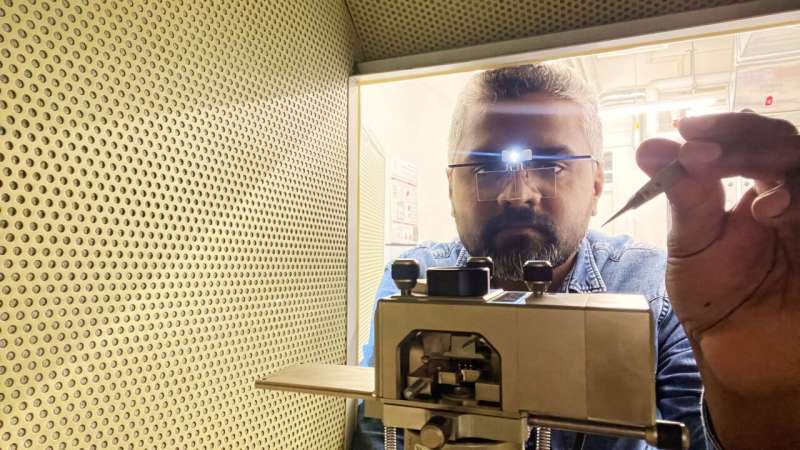
by Swiss Federal Laboratories for Materials Science and TechnologyEmpa researcher Peter Nirmalraj analyzes blood samples using atomic force microscopy (AFM). Credit: EmpaIf the suspicion of Alzhe

Detecting dementia in the blood

by Swiss Federal Laboratories for Materials Science and TechnologyEmpa researcher Peter Nirmalraj analyzes blood samples using atomic force microscopy (AFM). Credit: EmpaIf the suspicion of Alzhe
Blood-based multiplexed diagnostic sensor helps to accurately detect Alzheimer's disease

Blood-based multiplexed diagnostic sensor helps to accurately detect Alzheimer's disease

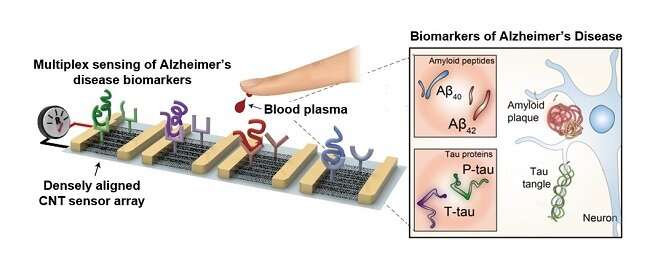
by The Korea Advanced Institute of Science and Technology (KAIST)Figure: A schematic diagram of a high-density aligned carbon nanotube-based resistive sensor that distinguishes patients with Alzh

Blood-based multiplexed diagnostic sensor helps to accurately detect Alzheimer's disease

by The Korea Advanced Institute of Science and Technology (KAIST)Figure: A schematic diagram of a high-density aligned carbon nanotube-based resistive sensor that distinguishes patients with Alzh
Cracking the code for cerebellar movement disorders

Cracking the code for cerebellar movement disorders

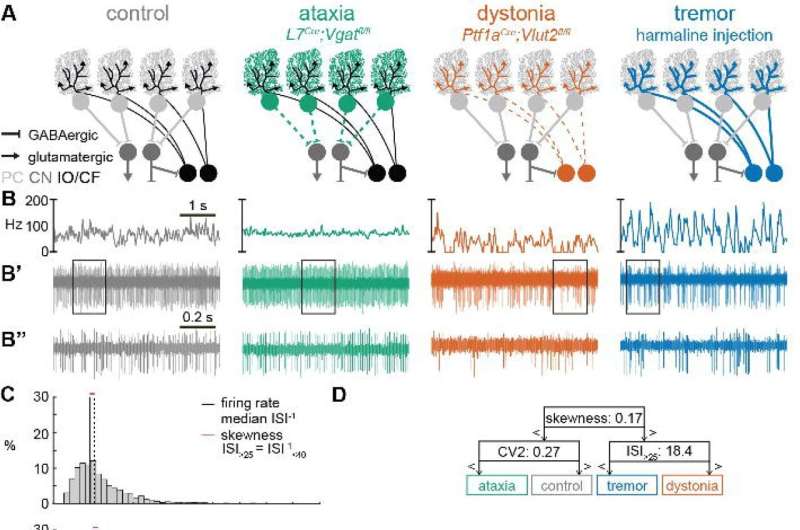
byTexas Children's HospitalSupervised classifier model predicts mouse phenotype based on spike signatures. Credit:eLife(2024). DOI: 10.7554/eLife.91483.2The cerebellum is a regio

Cracking the code for cerebellar movement disorders

byTexas Children's HospitalSupervised classifier model predicts mouse phenotype based on spike signatures. Credit:eLife(2024). DOI: 10.7554/eLife.91483.2The cerebellum is a regio
Untangling tau—researchers find a 'druggable target' for treating Alzheimer's disease

Untangling tau—researchers find a 'druggable target' for treating Alzheimer's disease

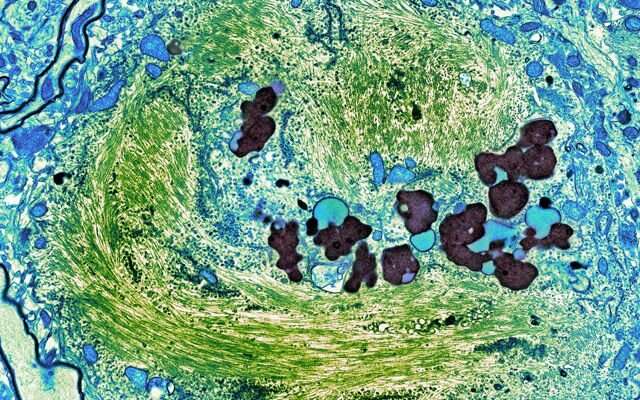
by University of California - San DiegoA micrograph by Thomas Deerinck of the National Center for Microscopy and Imaging Research at UC San Diego School of Medicine depicts tangles of tau protein

Untangling tau—researchers find a 'druggable target' for treating Alzheimer's disease

by University of California - San DiegoA micrograph by Thomas Deerinck of the National Center for Microscopy and Imaging Research at UC San Diego School of Medicine depicts tangles of tau protein
Prioritizing the unexpected: New brain mechanism uncovered

Prioritizing the unexpected: New brain mechanism uncovered

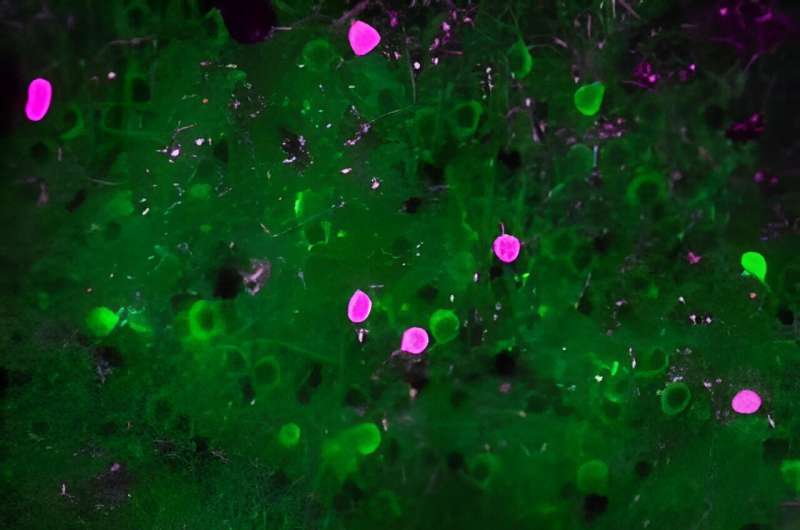
bySainsbury Wellcome CentreNeurons in the mouse visual cortex with VIP neurons in magenta. Credit: Sainsbury Wellcome CentreResearchers have discovered how two brain areas, the neocortex and the

Prioritizing the unexpected: New brain mechanism uncovered

bySainsbury Wellcome CentreNeurons in the mouse visual cortex with VIP neurons in magenta. Credit: Sainsbury Wellcome CentreResearchers have discovered how two brain areas, the neocortex and the
BMI1, a promising gene to protect against Alzheimer's disease

BMI1, a promising gene to protect against Alzheimer's disease

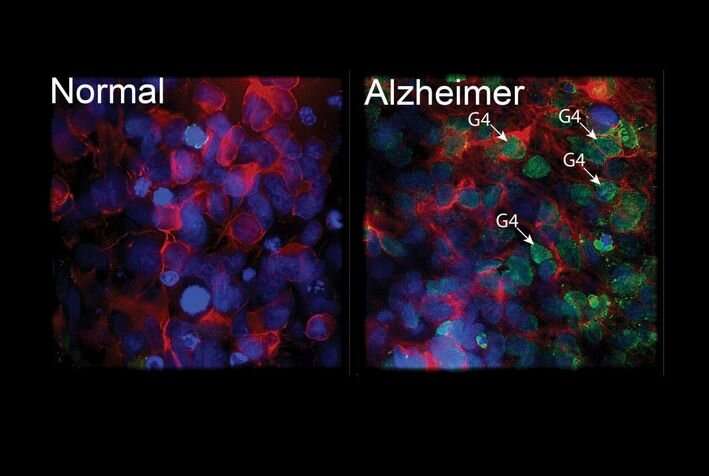
by Julie Gazaille,University of MontrealHealthy neurons (left) and Alzheimer's disease neurons (right): in green, accumulation of G4 structures in Alzheimer’s neurons. Credit: University of

BMI1, a promising gene to protect against Alzheimer's disease

by Julie Gazaille,University of MontrealHealthy neurons (left) and Alzheimer's disease neurons (right): in green, accumulation of G4 structures in Alzheimer’s neurons. Credit: University of